
For anyone who loves a good deal, the internet is a goldmine. But with millions of online stores all screaming for your attention, how do you find the real bargains? It can feel like looking for a needle in a digital haystack.
This guide is designed to cut through that noise. We'll start by looking at the most reliable, high-value discount shopping websites out there. Think of this as your personal map to smarter online shopping, helping you skip the endless searching and get straight to the savings.
Your Guide to Top-Tier Discount Websites
So, where do you even begin? Let's start with the giants that have practically defined online retail.
A few key players dominate the e-commerce world for a reason. In the U.S. alone, Amazon is the undisputed king, capturing a massive 37.6% market share in 2023. That’s more than a third of all online sales. Walmart comes in second with 6.4%, leveraging its huge network of physical stores to bolster its online game. You can dig into more of these numbers over at Inbeat.agency.
These platforms aren't just market leaders; they're often the first and best stop for bargain hunters because they offer:
- A massive product selection that covers just about everything you can think of.
- Competitive pricing, with prices that are constantly being adjusted to beat the competition.
- Reliable (and often free) shipping, especially for members of their subscription programs.
Just look at Amazon's homepage. It's built to draw you in with daily deals and recommendations tailored just for you.

The screenshot shows exactly how they do it—putting time-sensitive offers and personalized product carousels front and center.
Pro Tip: I always make a beeline for the "Today's Deals" or "Warehouse Deals" sections on big sites like Amazon. This is where you'll find some of the deepest, time-limited discounts on both new and open-box items. It’s a hidden gem for serious savings.
Top-Tier Discount Websites at a Glance
Here’s a quick comparison of leading discount websites to help you choose the best platform for your needs, highlighting their strengths and best-use cases.
| Website | Best For | Key Feature |
|---|---|---|
| Amazon | Everyday items and vast selection | Prime membership benefits and "Today's Deals" |
| Walmart | Groceries and household essentials | In-store pickup options and "Rollback" prices |
| eBay | Unique, used, or hard-to-find items | Auction-style bidding for potential deep discounts |
| Overstock | Home goods, furniture, and décor | Frequent sales events and a "Deals" section |
| Slickdeals | Finding community-vetted deals across the web | Deal alerts and user-driven deal ratings |
Each of these sites offers a different flavor of bargain hunting. Choosing the right one often depends on what you're looking for, from everyday necessities to that one-of-a-kind find.
How to Spot Legitimate Discount Websites
Not every jaw-dropping deal you see online is the real McCoy. The world of e-commerce is absolutely massive—we're talking over 28 million online stores globally as of 2025, with thousands more popping up every single day. If you want to be a smart shopper, learning how to tell the good from the bad is non-negotiable. You can dig into more of these e-commerce trends at Textmaster.
Before you even think about whipping out your credit card on a site you don't recognize, you need to run through a quick mental checklist. The whole point is to keep your money and personal details safe from the shadier corners of the internet.
Start With the Basics: Security and Contact Info
First things first, look at the website's address in your browser. Does it start with https://? That little "s" means "secure," and it tells you that any information you share with the site is encrypted. This is the absolute bare minimum for any shopping site worth your time. No "s," no sale.
Next, go on a hunt for a "Contact Us" page. A real business will make it easy to get in touch. Look for a physical address, a working phone number, or at least a professional-looking email address—not some generic Gmail or Yahoo account. If you can't find a clear way to contact them, that's a huge red flag.
Dig Into Reviews and Return Policies
Don't just take the website's word for it with their own cherry-picked testimonials. You need to do some independent digging. Head over to third-party review sites to see what real customers are saying.
- Trustpilot: A fantastic resource for reading up on customer experiences with online businesses.
- SiteJabber: Another excellent platform for getting unbiased company reviews.
- Better Business Bureau (BBB): Perfect for checking a company’s official rating and seeing if any complaints have been filed against them.
Finally, take a hard look at the return policy. A legitimate, confident business will have a return policy that's clear, fair, and easy to understand. If the policy is a maze of confusing jargon, ridiculously strict, or just plain missing, that's your cue to take your business elsewhere.
Mastering the Art of Deal Hunting

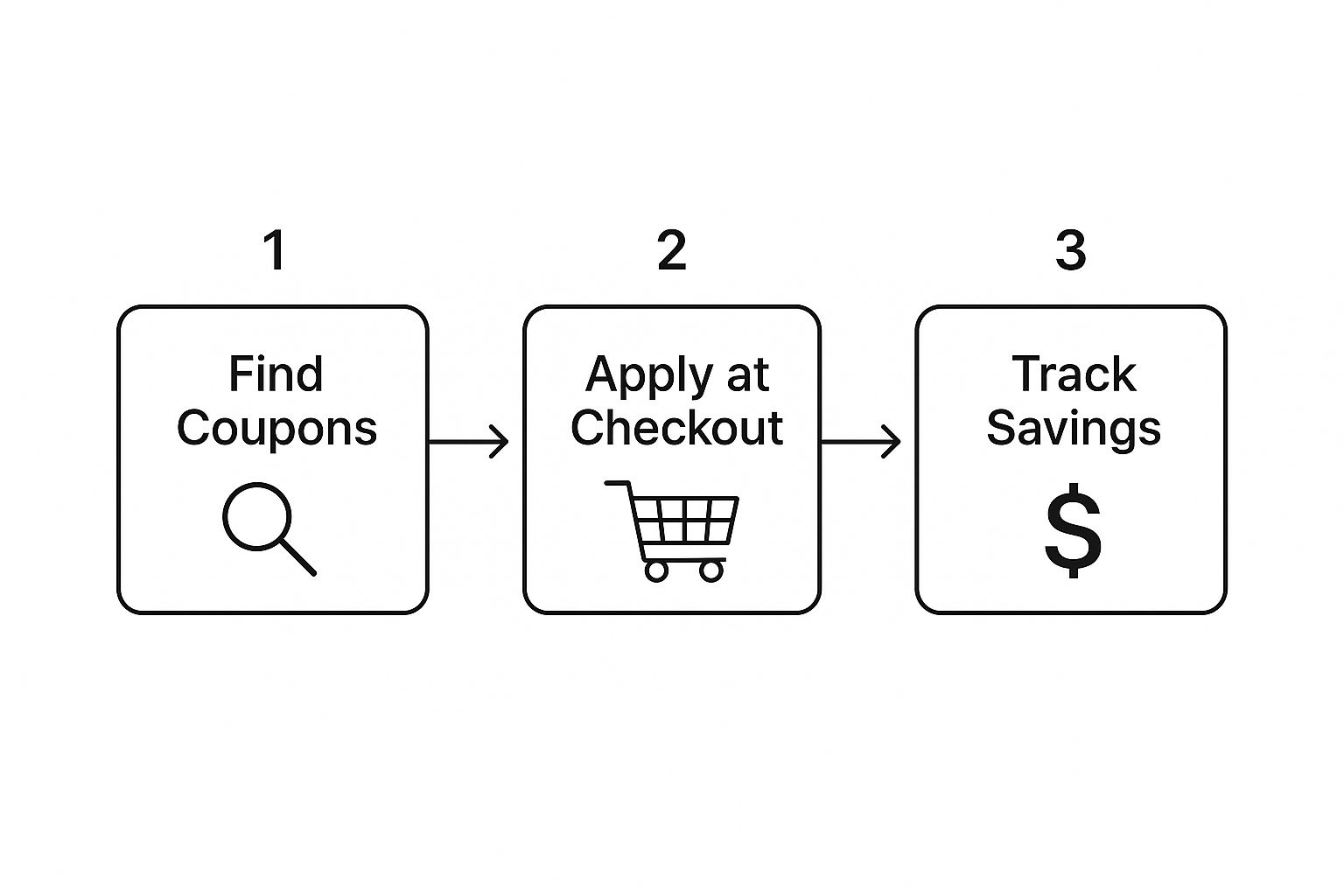
Anyone can find a discount. But finding the best price—that absolute rock-bottom deal—is a skill. If you really want to stretch your budget, you need to think like a pro shopper. This means getting organized and using the right tools to track prices and snag coupons automatically.
A great first step is to install a browser extension. I personally use tools like Honey or Rakuten to do the heavy lifting. They quietly run in the background and, when you get to checkout, they automatically test coupon codes for you. It's a simple change that can save you a surprising amount of cash over time with almost zero effort.
Automate Your Savings Strategy
Beyond coupons, you need a system for tracking prices on items you've got your eye on. Patience is a virtue in bargain hunting, and waiting for the perfect moment to buy is how you win.
This is where a price tracker becomes your best friend. If you shop on Amazon, you absolutely need a tool like CamelCamelCamel. You just tell it which product you want and what you're willing to pay, and it shoots you an email the second the price drops. It's a game-changer for bigger purchases where even a 10% price drop can mean serious savings.
A savvy shopper doesn't just find deals; they create opportunities for savings. By setting up systems like price alerts and using a dedicated email for newsletters, you're building a personalized deal-finding machine that works for you 24/7.
Smart Tactics for Every Shopper
Your two biggest allies are timing and organization. It's all about planning your buys around major sales events to get the most bang for your buck.
- Create a Shopping Calendar: Get a calendar and circle key dates like Black Friday, Cyber Monday, and Amazon Prime Day. Planning your big-ticket purchases around these sales will net you the deepest discounts of the year.
- Use Comparison Engines: Never hit "buy" without a quick check. Pop your item into a tool like Google Shopping. It pulls prices from tons of different stores, so you can see in an instant if you can get it cheaper somewhere else.
- Set Up a "Shopping" Email: Here's a pro tip I swear by: create a separate email address just for retail newsletters. This way, you get all the subscriber-only deals and coupon codes without drowning your main inbox in marketing emails.
Navigating Different Types of Discount Platforms
To get the best deals, you first have to know where you're shopping. It's not a one-size-fits-all world; different discount sites have entirely different ways of operating. Figuring out these differences is the secret to zeroing in on the right platform for what you need, at a price that makes you happy.
Think about daily deal sites like Woot! (which is actually an Amazon company). Their whole model is built on creating a sense of urgency. You'll find a small selection of products with massive discounts, but there's a catch: they're usually only available for 24 hours or until they're gone. It’s perfect if you love the thrill of the hunt or are prone to a good impulse buy.
The sheer volume of shoppers on these sites is what fuels the competitive pricing. For perspective, Amazon pulls in over 3.16 billion visits every month, and other big names like eBay and AliExpress aren't far behind with hundreds of millions of their own. You can dig deeper into these kinds of stats over at Yaguara.co.
From Flash Sales to Online Outlets
Then there are flash sale sites, which feel like a more exclusive, members-only club. Sites like Gilt focus on high-end fashion, home decor, and even travel packages, all available for a short time. They create a VIP vibe, giving you access to luxury brands for way less than retail.
But maybe you don't like a ticking clock. If a more relaxed, traditional shopping experience is what you're after, online outlets are your go-to. I'm talking about places like Nordstrom Rack or Saks OFF 5TH. They work just like a physical outlet mall, offering a steady stream of last season's designer goods, overstock items, and products made just for the outlet.
My Two Cents: The smartest approach is to match the site to your shopping goal. If you want a killer deal on a random gadget and you're ready to pounce, a daily deal site is your best bet. But if you're hunting for a specific pair of designer jeans from last year, an online outlet is where you should start.
And don't forget about marketplaces and international sellers. These are treasure troves for bargain hunters.
- Marketplaces like eBay are fantastic. You can find just about anything, new or used, often from individual sellers. This direct-from-person setup can lead to some truly incredible finds.
- International platforms like AliExpress put you in direct contact with manufacturers overseas. The prices can be shockingly low, but be prepared for much longer shipping times. It's a trade-off, but often a worthwhile one.
Common Mistakes to Avoid When Shopping Online
It’s easy to get swept up in the thrill of a great deal. That excitement can sometimes cloud your judgment, leading to some surprisingly costly mistakes. Trust me, even the most experienced deal hunters can fall into these common traps when they’re clicking through discount websites. Being a smart shopper means looking beyond the sticker price.

The biggest and most frequent mistake? Getting fixated on an item's low price, only to get hit with outrageous shipping costs right at the end. That $10 shirt is no bargain if you end up paying $15 just to ship it. Before you ever commit, always look at the total cost in your cart.
Another huge oversight is not checking the return policy. What good is a deeply discounted item if you can’t send it back when it doesn't fit or just isn't what you expected? A super-restrictive or nonexistent return policy should be a massive red flag.
Dealing with Third-Party Sellers
Lots of the best discount sites are actually marketplaces, hosting thousands of different third-party sellers. This is where you absolutely have to be more careful.
Always vet third-party sellers by checking their ratings and recent customer feedback. A seller with consistently poor reviews is a risk, no matter how low their prices are.
Finally, and I can't stress this enough, read the full product description. Misleading titles are designed to trick you into buying something you didn't want, like a counterfeit product or an item in poor shape. Pay close attention to the details—materials, dimensions, and any notes on the item's condition—so you know exactly what’s coming in the mail.
Got Questions About Smart Shopping? We've Got Answers.
Diving into the world of online deals can feel a bit overwhelming, I get it. But with a few solid strategies in your back pocket, you can shop with total confidence. Let's break down some of the most common questions I hear—tackling these is the fastest way to become a sharper, more successful bargain hunter.
A lot of people ask me if a flashy deal is actually a good value. It's a great question, because a low price tag doesn't automatically mean you're getting a steal. The secret is to look at the item's price history.
A true bargain isn't just about a low price; it's a price that's way lower than what it's been selling for recently. Don't get tricked by an inflated "original" price that's just there to make a 20% discount look like 50%.
A quick search on a price comparison tool like Google Shopping is a good start. It shows you what different stores are charging for that item right now. But for the full picture, I always recommend a price tracker like CamelCamelCamel. It shows you an item’s entire price history on Amazon, so you can see if today's "deal" is legit or just hype.
Finding the Best Deals and Staying Safe
Another question I get all the time is about the best time of year to find discounts. Sure, everyone knows about Black Friday and Cyber Monday, but you'd be surprised how many other opportunities there are.
- End-of-Season Sales: This is where you find the real gold. Think patio furniture in late summer or ski jackets in late winter. Stores are desperate to clear out old inventory.
- Three-Day Weekends: Sales around holidays like Memorial Day and Labor Day are often much better than people expect.
- Category-Specific Sales: Many products have their own prime time for deals. For example, January is a fantastic month for electronics, right after all the new gadgets are announced at the Consumer Electronics Show (CES).
Finally, how can you pay safely on a discount site you've never used before? This one's simple: use a credit card or a service you trust like PayPal. Credit cards offer incredible fraud protection. If the product never shows up or isn't what was advertised, you can dispute the charge. I'd strongly advise against using a debit card or a direct bank transfer—you have far less protection if things go sideways.
Ready to put these tips to the test? You can find some incredible deals on everything from the latest electronics to new fashion finds at Mr PriceStore Less Price. Start shopping now and see what unbeatable prices you can discover!
Article created using Outrank
Leave a Reply